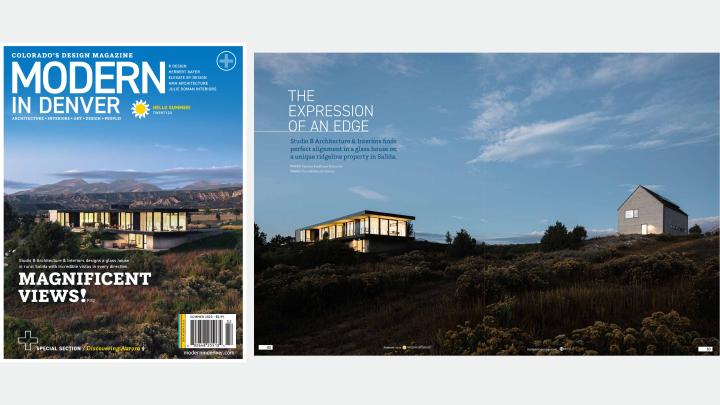
Modern In Denver features Rivers Edge
Story by Vanessa Kauffman Zimmerly
Photography by Parrish Ruiz De Velasco
Rivers Edge
Modern in Denver
Summer 2023
Studio B embraces a lifestyle of innovation, crafting modern designs that seamlessly integrate with their surroundings. Rooted in sensitivity to the environment and materials, our work reflects a quiet yet powerful connection to each site, blending minimalism with rich textures and meticulous details.
Guided by a commitment to sustainability, we design spaces that respond to light, views, and orientation, enhancing their relationship with the landscape. Through collaboration and exploration, Studio B creates architecture that inspires clients to see their spaces, and themselves, in transformative ways.
Story by Vanessa Kauffman Zimmerly
Photography by Parrish Ruiz De Velasco
Rivers Edge
Modern in Denver
Summer 2023
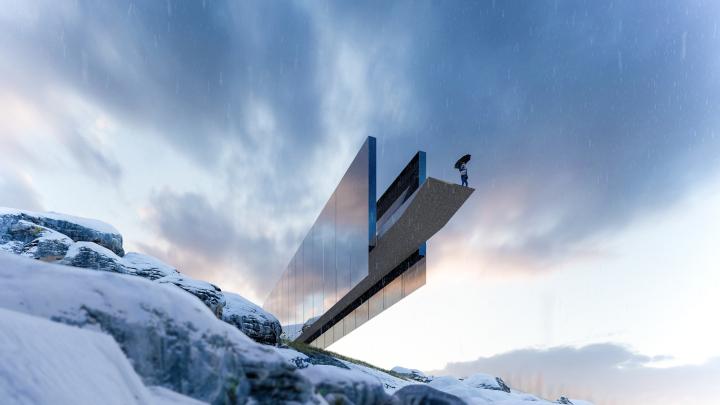
The story, “An Alternative Architecture for Art,” follows our collaboration with Boulder artist Jamie Kripke, who commissioned Studio B to design a fully immersive virtual gallery for his series The Divide. Rather than creating a traditional website, the project challenged our team to think like architects in a space unconstrained by gravity, building codes, or physical limitations.
Inspired by the landscapes of the Continental Divide, the gallery places visitors within a dramatic linear glass structure set among alpine terrain. As viewers move through the experience, changing light, shifting weather, and expansive mountain views become part of the exhibition itself, allowing architecture and artwork to exist as a single composition.
Although the gallery exists entirely online, the design process remained rooted in the same principles that guide every Studio B project: thoughtful sequencing, material expression, proportion, and an emotional connection to place. The project demonstrates that architecture is not defined solely by buildings, but by the experiences it creates.
Story: Vanessa Kauffman Zimmerly
Featured in: Modern in Denver
Project: Jamie Kripke’s The Divide
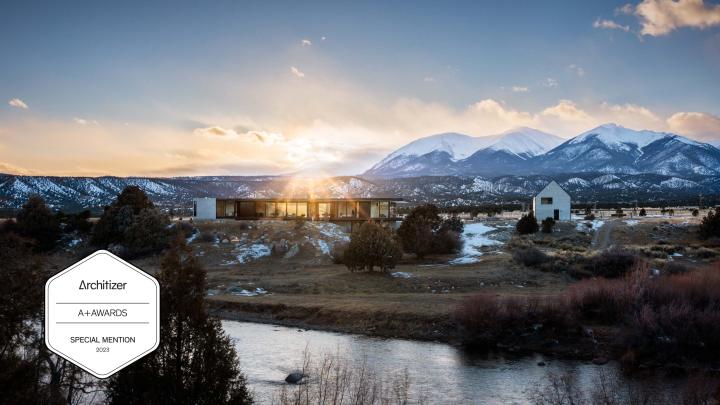
The World’s Best Architecture : Announcing the Winners of the 11th Annual A+Awards!
As the industry’s largest and most international awards program, Architizer’s A+Awards honors the best architecture and spaces from across the globe.
Private House 4000-6000 sqft
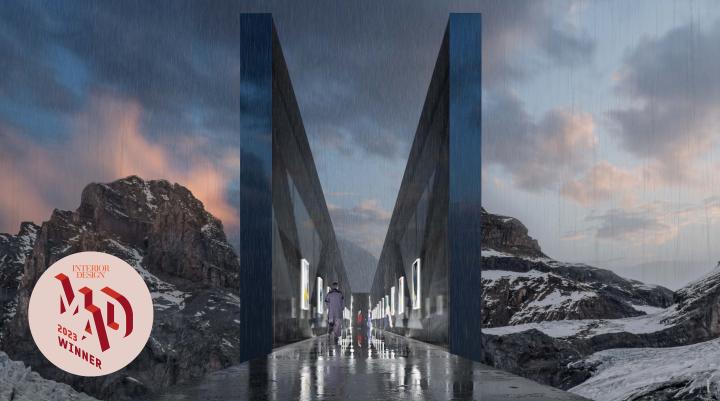
Studio B + The Divide Museum
Unbuilt - Commercial
The global, design magazine, Interior Design hosted the industry’s first Metaverse Architecture and Design (MAD) Awards. From Innovation Awards categories, such as Workplace Extension, to Built and Unbuilt categories that recognize a range of projects and products, the MAD Awards honored those at the forefront of design in all its forms.
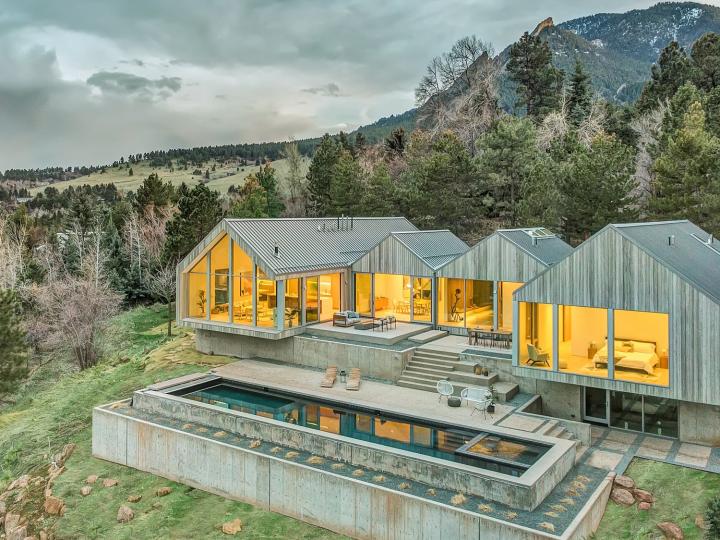
SOLD - $9,500,000
Bedrooms: 4 + Office + Flex Room
Bathrooms: 5
Interior: 4,676 Sq. Ft.
Exterior: 33,000 Sq. Ft.
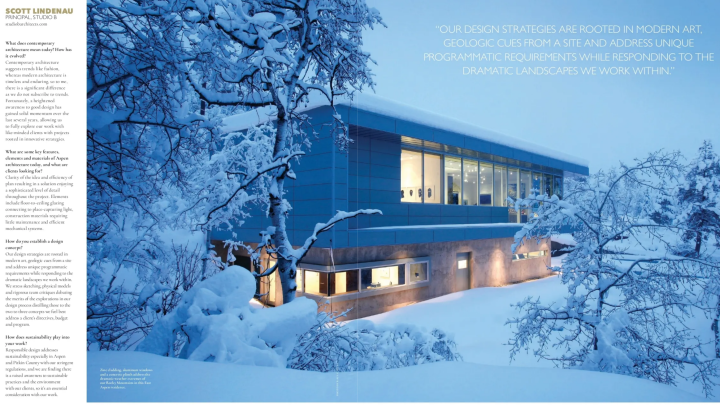
An Inside Look into how Aspen Architecture has Evolved
Text by Linda Hays
Aspen Magazine
Feb 2023
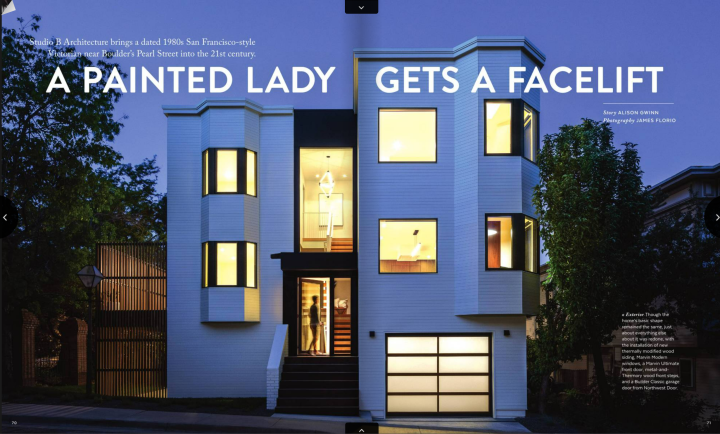
A Painted Lady Gets a Face Lift
Story by Alison Gwinn
Photography by James Florio
Beacon Court Residence
Colorado Homes & Lifestyles
Jan/Feb 2023

We are thrilled to announce the completion of Three Gables, a modern architectural masterpiece that seamlessly blends functionality, design excellence, and a deep connection to its surrounding environment. This project represents a milestone for Studio B, as it includes not only full architectural and interior design services but also a comprehensive furniture contract that brought every detail of the home to life.
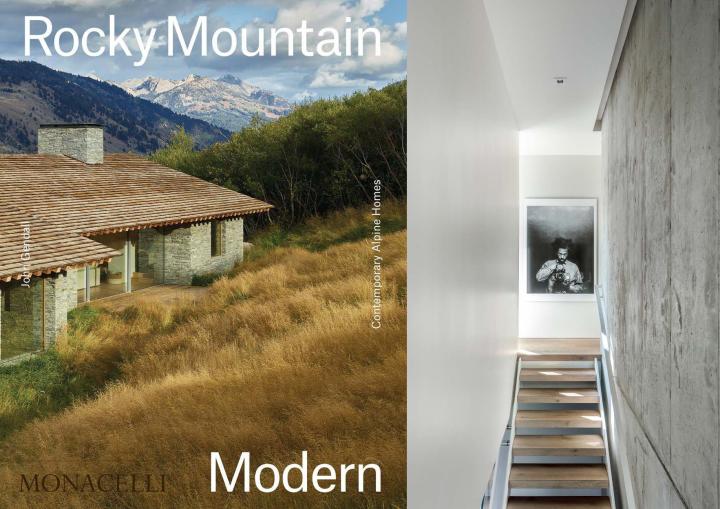
Rocky Mountain Modern
by John Gendall
Monacelli Press
June 28, 2022

A Mountain Abode That Reaches New Heights
Above Aspen, and art-filled home offers seclusion, serenity and wraparound mountain views
Story by Suzanne S. Brown
Colorado Homes & Lifestyles
March 2022
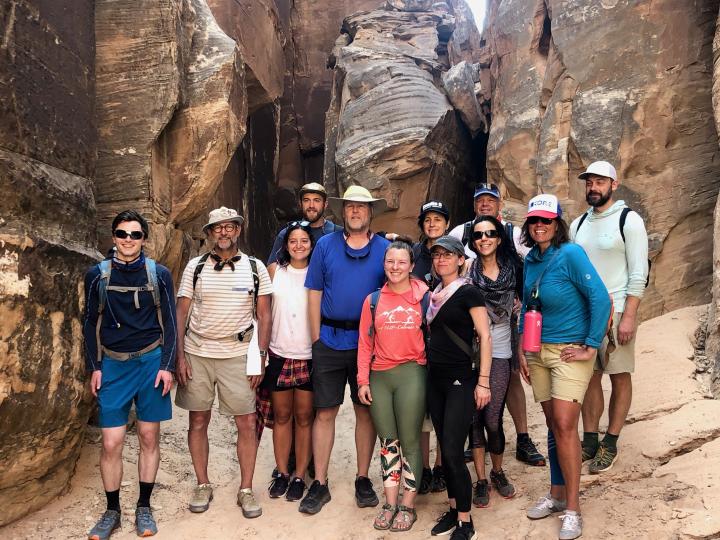
To celebrate 30 incredible years, Studio B embarked on an unforgettable journey through the breathtaking Cataract Canyon. Immersed in nature’s beauty and free from the distractions of everyday life, the adventure was a perfect opportunity to reflect, recharge, and reconnect. Between exhilarating runs through roaring whitewater rapids, we hiked serene desert trails, sketched under vast, open skies, and found quiet moments of rest in the shade of remote sandstone arches.
Here’s to 30 years of creativity, exploration, and connection—and to many more to come. Cheers to 30!
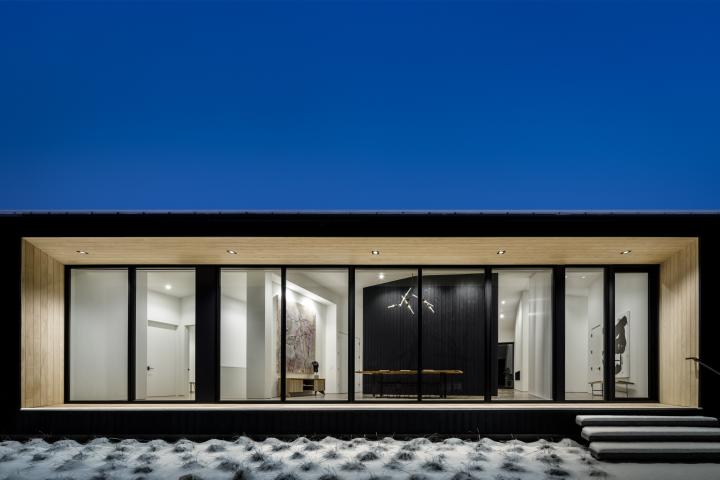
We are honored to share that our Vista Drive Pavilion project has been featured in Dwell, showcasing our commitment to modernist design that thoughtfully responds to both site and client vision.
Located in Boulder, Colorado, Vista Drive Pavilion is a serene family retreat set against a backdrop of stunning mountain views. This project seamlessly integrates indoor and outdoor spaces, creating a sense of tranquility while celebrating the natural beauty of its surroundings.
The design features a simple yet striking palette of glass, steel, and natural materials, offering a minimalist aesthetic that prioritizes light, space, and connection to nature. Large expanses of glazing frame panoramic views, while courtyards and covered patios invite a seamless transition between interior and exterior living.