
Aspen
720 East Durant Avenue
Unit E5
Aspen, Colorado 81611
+1 970 920 9428
info@studiobarchitects.com
It’s a question that often starts simply.
Is it the warmth of wood?
The weight of concrete?
Or the way light moves through a room over the course of a day?
The answer is never one or the other.
We design with both.
Light reveals.
Material grounds.
But neither exists in isolation, and neither begins at the finish palette.
Light reveals.
Material grounds.
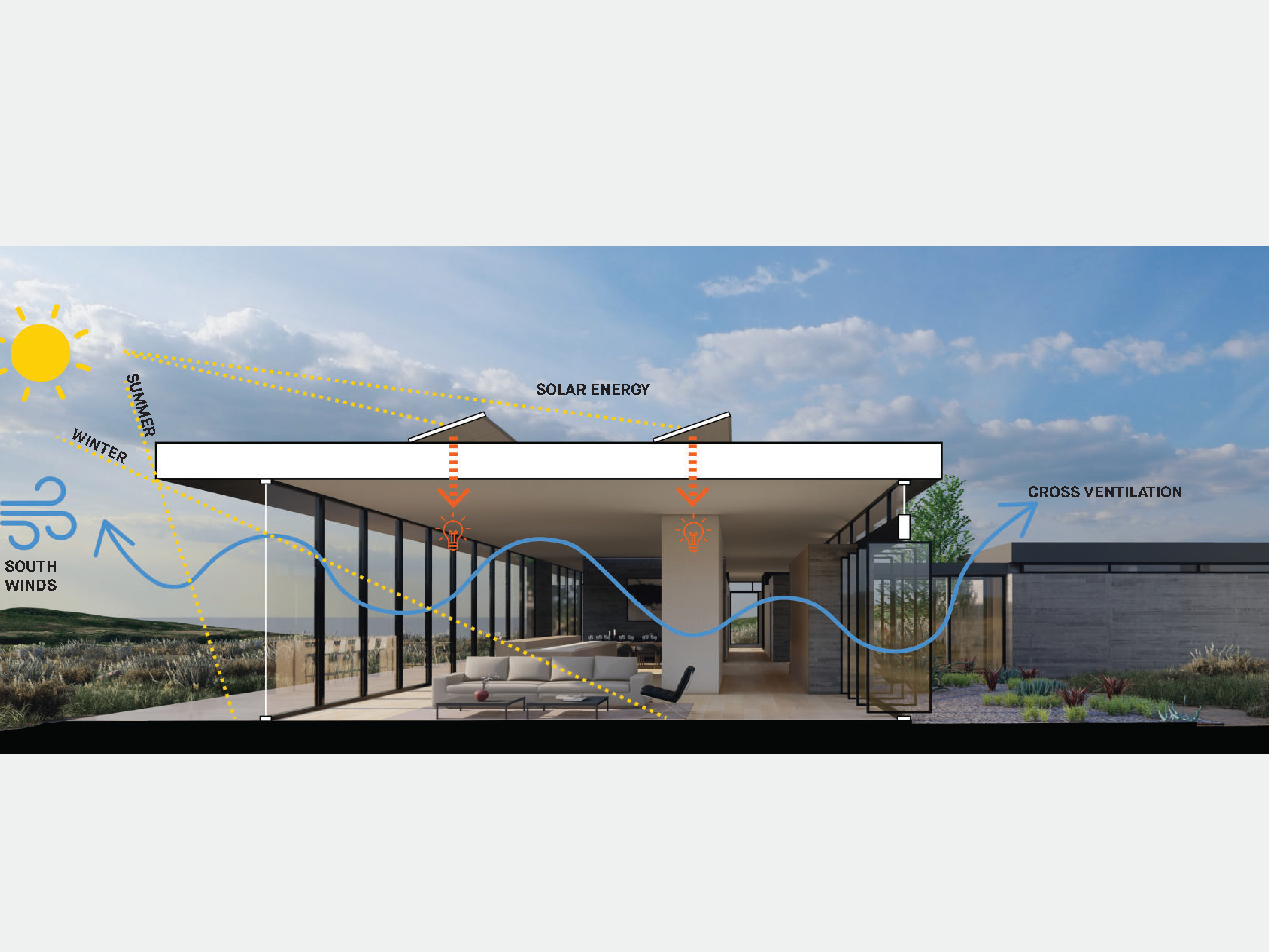
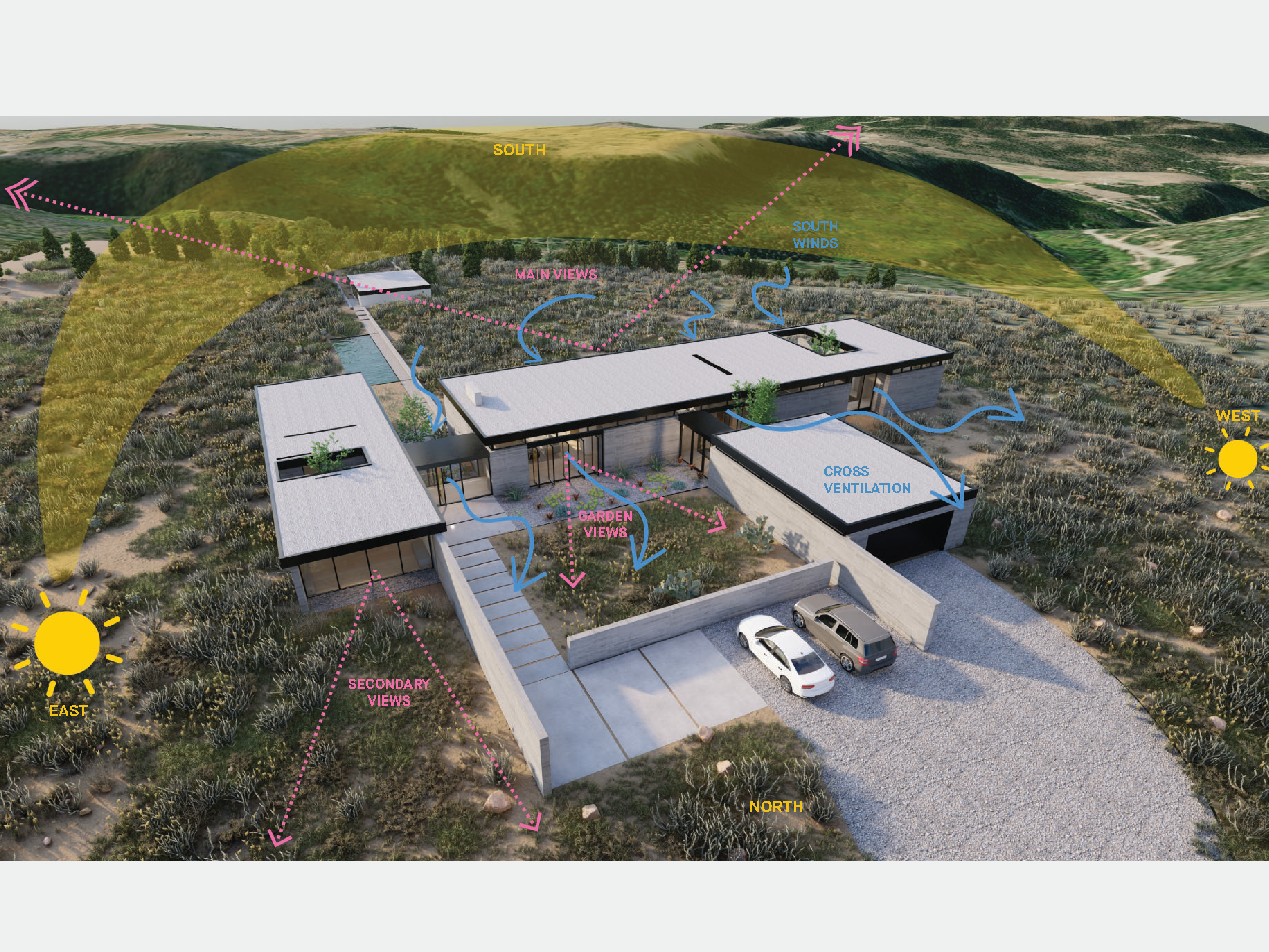
Before material is selected, before windows are detailed, the project is already being shaped by light.
Where the sun rises and sets.
How it moves across the site.
Where the prevailing winds come from.
What is worth framing, and what should be protected.
Orientation becomes the first design decision.
In this project, the building stretches along the landscape to capture primary views while shielding itself from exposure. Courtyards are carved out, not just as outdoor space, but as instruments for bringing controlled light deeper into the plan.
Even ventilation becomes part of the experience. Air moves through the house the same way light does, guided, shaped, and made intentional.
At this scale, light isn’t added later.
It’s built into the architecture.
Light is dynamic. It shifts throughout the day and across seasons, shaping perception in subtle but constant ways. It can expand a room, soften edges, or bring focus to a single moment within a space.


Once the building is placed, the next question is not just how much light. but what kind.
A roof overhang can block high summer sun while allowing winter light to penetrate deep into the space.
Glass placement controls glare, reflection, and transparency.
Openings on opposite sides allow for cross ventilation, softening the interior environment without mechanical systems.
Light is no longer abstract, it becomes something precise.
Measured. Tested. Refined.


“Living well means a closeness with nature, and in architecture, that comes through light, materiality, views, and ventilation.” - Loryn Lewis
Only after light is understood do materials begin to matter in the way most people first notice.
Concrete holds shadow and creates depth.
Plaster diffuses light, softening edges.
Wood reflects warmth, shifting tone throughout the day.
The same wall, under different light conditions, becomes something entirely different.
And the same light, hitting different materials, creates entirely different experiences.


This is where architecture moves beyond decision-making and into refinement.
Light without material can feel thin, temporary, undefined.
Material without light can feel heavy, static, unresolved.
The goal is not contrast for its own sake.
It’s alignment.
When it’s working, you don’t think about light or material separately.
You just feel the space,
calm, grounded, and clear.
As if it could only have been designed this way.
Specific to the place.
Specific to how it’s lived in.
Inevitable.

“The most helpful insights come from what is, or isn’t, working in a client’s current home. Sometimes it’s square footage. Sometimes it’s something as personal as morning light or a specific view.” - Loryn Lewis
If you’re interested in how those decisions begin, read Orientation Is the First Material, where we explore how site, sun, and wind shape the design long before material is introduced.
Only for you, only in this place